
Even when COVID-19’s impact is diminished and the government gives you the green light, you still have to choose if, how, and when to reboot your business. The smart way is to reboot only the parts that can be successful. Then deliberately move through virtual steps before physical steps, over-communicating emotionally, rationally and inspirationally every step of the way.
If
The world is never going to be the same as it was before COVID-19. Assess what’s changed temporarily, permanently, and fundamentally across customers, collaborators, capabilities, competitors and conditions – including environment, social and government as Neal Kissel highlights in his note on 5 lasting changes CEOs need to be planning for now.
Think through scenarios and your strengths, weaknesses, opportunities and threats, to develop a new view of your leverage points and business issues at this point of inflection and how those impact your strategy, organization and operations.
Use that to help figure out which parts of your business, if any, can and should be:
- best-in-class/superior to all other choices
- world class/parity with the top tier
- strong/above average
- good enough/minimally viable – and scaled or outsourced
- gone from the list of things you do – and not restarted.
How
You can’t do anything until you can make, deliver and support your product or service. Ensure your supply chain, distribution ecosystem, and team are ready, willing and able to go.
Then, get ready to market and sell. This will require a reboot of your marketing/sales funnel. Everyone’s world has been reset. Everyone’s reevaluating their choices. Don’t assume your customers will come back automatically. Instead, rebuild awareness and then interest, so you’re in their consideration set when they desire a product or service like yours, and turn that into action.
When
New York Governor Andrew Cuomo put it well in his April 13, 2020 joint press conference with other Northeast governors. He said we should reopen, but reopen “With a plan, with a smart plan, because if you do it wrong it can backfire.” He went on to say we need to “Take one step forward. See how it works. Then you take the next step.” And everyone’s plan may be different because the plans have to “fit the facts and the circumstances.”
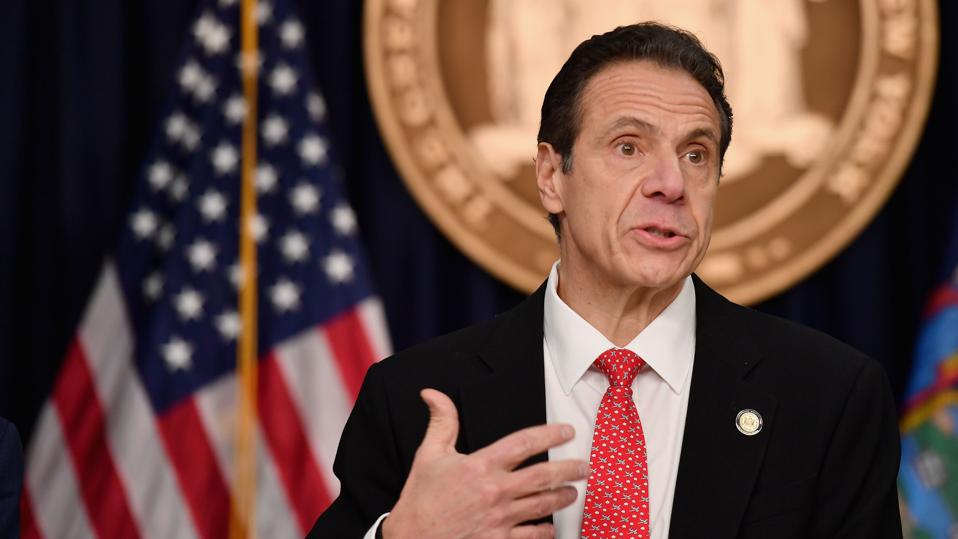
Andrew Cuomo
AFP VIA GETTY IMAGESWith that in mind, think and act in steps.
Virtual steps:
- Bring leaders back virtually to build out your strategy, smart plans, guidelines, parameters and practices – to guide everything that follows and so those that follow them know what to do and how they should work in the new reality.
- Reboot or build supporting infrastructure and complete other tasks that can be completed without a physical presence.
Physical steps. No employees, allies, or customers should return until it is safe. Then use scientifically appropriate tests to determine which individuals can return to:
- Prepare physical locations for other returnees,
- Complete pre-start tasks,
- Engage in limited reboot efforts to see how things work,
- Reboot fully – noting not all have to come back physically or at all.
Communication steps. Wrap it all in emotional, rational and inspirational mood-countering leadership communication – as you should be doing more frequently than you ever imagined appropriate through the crisis and restart.
Emotional
Connect with your audience by being authentic, relatable, vulnerable and compassionate as you empathize with how the crisis has and is affecting them personally – Mayfield and Mayfield’s empathetic language. As one of PrimeGenesis’ partners puts it, “No one cares how much you know until they know how much you care.”
Rational
Lay out the hard facts of the current situation – in detail with a calm, composed, polite and authoritative tone and manner. This is first part of the Stockdale Paradox. We’re defining facts here as things that any rational person would agree are true no matter what bias or perspective they bring to the situation – objective, scientific truths as opposed to subjective, personal, cultural or political truths, opinions or conclusions.
Inspirational
Inspire others by thinking ahead, painting an optimistic view of a future they care about, and calling people to practical actions they can take to be part of the solution – instilling confidence in themselves with Mayfield and Mayfield’s meaning-making and direction-giving language.
The optimistic future view goes to meaning and purpose: mission, vision and values. Ground all your communication in values: be – do – say.
The call to practical action is direction-giving, making people part of the solution, whatever part they are playing for their own and the greater good.
Click here for a list of my Forbes articles (of which this is #630) and a summary of my book on executive onboarding: The New Leader’s 100-Day Action Plan.