As an executive onboarding into a new role, do not trust your first impressions and instincts.
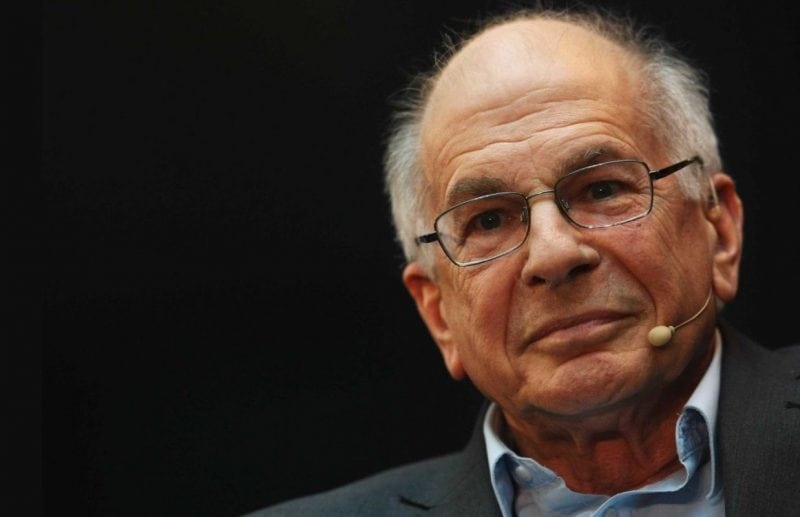
You don’t understand your new situation, team and organization as well as you knew your old ones. That means that thinking and acting the way you did before is fraught with danger. This is what Nobel Prize winner Daniel Kahneman describes as intuitive thinking. Instead, follow his advice to stop and apply the more deliberate thinking new situations require.
Kahneman summed up the argument in his 2002 Nobel Prize Lecture. In it he described intuition as “thoughts and preferences that come to mind quickly and without much reflection” as opposed to a more deliberate, controlled, effortful, rule-governed way of thinking through things. The critical point is that our intuitions are often wrong if we don’t take into account biases like accessibility, framing, and attribution.
Context
Ferdinand de Lesseps provides a case in point. He and his team built the Suez Canal, one of the world’s great engineering feats. They were so successful that he was asked to do it again — in Central America. But by any measurement, de Lesseps’ attempt at a Panama Canal failed. The canal did not get built. All the investors lost all their money. Twenty thousand people died. And de Lesseps was sentenced to prison.
The intuitive side of de Lesseps’ brain defaulted to his most recent experience, and he assumed what worked before would work again. Had he let the deliberate, more disciplined side of his brain engage, he might have figured out that what worked in the flat, dry Suez desert would not necessarily produce the same results in the different context of mountainous, rainy, disease-ridden Panamanian jungles.
Planning
For years, we’ve been pushing people to think through 100-Day Action Plans well ahead of their starts. When we work with them to create those plans, more times than not they are especially appreciative of the structure and discipline and how we forced them to think things through step by step. It’s not that you can’t figure these things out as an executive going into a new role. It’s that you have to apply structure and discipline to your thinking.
Competence
The insights of Kahneman and his partner Amos Tversky go hand-in-hand with the conscious competence model. As people learn new skills, they go from unconsciously incompetent (don’t know what they don’t know) to consciously incompetent (know what they don’t know and aren’t happy about it) to consciously competent (can do with deliberative thinking) to unconsciously competent (can do intuitively).
When you move into a new organization or a meaningfully different new role, you go from being competent to incompetent. If you’re unconsciously incompetent you’re going to get into trouble because you’ll be relying on your old intuitions. If you’re consciously incompetent you can ratchet yourself up to conscious competence with deliberative thinking. (It’s the difference between driving off the ferry from the U.K. to France and not knowing versus knowing you’re supposed to drive on the right side of the road.)
Implications
Now that you’ve met the enemy, it’s easy to defeat it. As an executive taking on a new role, the enemy is you – or, more precisely, your intuitive thinking.
Knowing that, you can consciously resist the allure of your intuition, ignore your initial impressions and push yourself to take the more deliberate, controlled, effortful, rule-governed way of thinking through things required to increase your chances of success.
Think hard about what’s different about your new situation versus your old situation. Look beyond the desert and mountains for differences in contexts, purposes, values, strategic choices, approaches and postures, ways of communicating and ways of working.
Get help in thinking this through and understanding the differences. Probe customers, suppliers, analysts, your predecessor, people that have left the organization, peers, direct reports for differences.