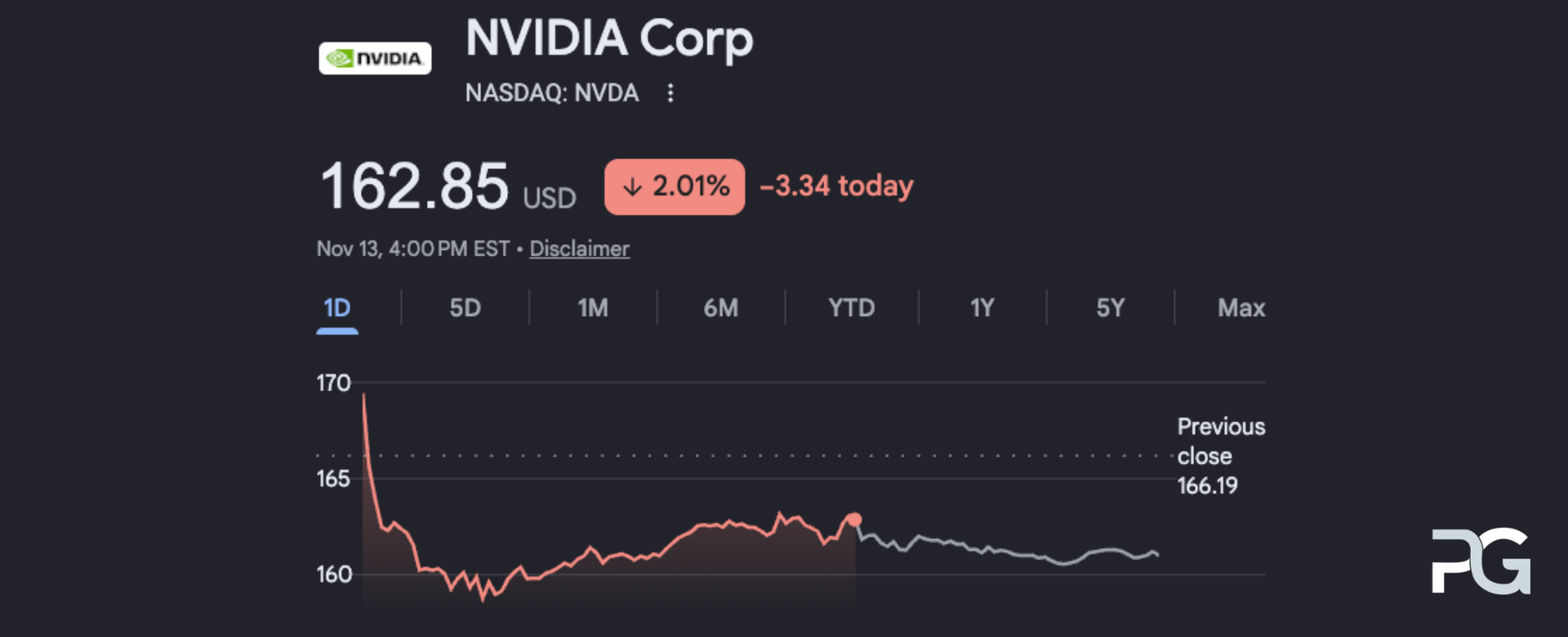

Jensen Huang spent 33 years building NVIDIA into one of the most consequential companies in the world. Then, almost overnight, he was gone.
On November 11, 2026, NVIDIA’s board accepted Huang’s resignation and appointed longtime CFO Colette Kress as interim CEO. The board immediately began searching for a permanent successor.
The circumstances surrounding Huang’s departure are certainly extraordinary. But the leadership challenge NVIDIA now faces is remarkably ordinary.
What happens to an organization when the person who built it is suddenly no longer there?
After spending more than 30 years as a CEO, I’ve come to believe that this question reveals one of the most dangerous misconceptions in organizational leadership: that succession planning is primarily about identifying the next person.
It isn’t.
Succession is not an event. It’s an operating system.
An Interim CEO Isn’t Necessarily a Failure
My PrimeGenesis colleague George Bradt recently examined what Kress should prioritize as NVIDIA’s interim CEO. His recommendations focus on protecting the brand, preserving the culture, maintaining strategic continuity, and managing the immediate challenges of transition.
All sensible priorities.
But I would challenge one underlying assumption: that appointing an interim CEO suggests the board wasn’t prepared.
Not necessarily.
An interim appointment can be evidence of thoughtful succession planning rather than its absence.
Consider the alternative. A board facing an unexpected departure immediately appoints a permanent CEO because someone was previously identified as the successor. But what if that individual isn’t ready? What if the circumstances demand capabilities different from those anticipated? What if the organization needs time to evaluate its strategic direction?
A well-designed succession system should provide both continuity and flexibility.
The interim leader provides continuity. The board preserves its flexibility.
The distinction isn’t whether an interim CEO was appointed. It’s whether the organization had already determined how leadership would function during the transition.
The Real Test Happens Before the CEO Leaves
When I began preparing to step away from my CEO responsibilities at Gold Mechanical, a 100% employee-owned mechanical contracting company, we approached succession as something much larger than replacing me.
Certainly, we needed to identify capable successors. But identifying people was only one component.
We needed to establish clear decision-making authority, develop leadership capacity throughout the organization, strengthen governance, and ensure the business could operate without depending on my daily involvement.
In other words, we needed to transfer more than a title.
We needed to transfer the ability to lead.
That distinction matters because organizations often confuse leadership development with succession readiness.
Having talented executives doesn’t necessarily mean an organization is prepared for its CEO’s departure.
If every consequential decision still requires the CEO’s approval, the organization hasn’t developed leadership capacity. It has developed capable assistants.
If institutional knowledge resides primarily in one person’s head, the organization hasn’t built continuity. It has accumulated dependency.
And if the leadership team cannot confidently navigate uncertainty without looking toward the corner office, the organization hasn’t established a succession system.
It has established a personality-driven operating model.
The Founder Paradox
Founders present a particularly interesting challenge.
The characteristics that make someone extraordinarily successful at building an organization can eventually become obstacles to its independence.
Vision. Conviction. Decisiveness. Personal relationships. An instinctive understanding of the business.
These are tremendous assets.
But when they remain concentrated in one individual, they also become organizational vulnerabilities.
This is what I call the founder paradox: The stronger the founder, the more intentional the organization must be about becoming independent of that founder.
NVIDIA presents an extraordinary test of this principle.
Huang wasn’t simply its CEO. He was its co-founder, public identity, strategic architect, and the leader who guided its transformation into an artificial intelligence powerhouse.
His departure raises questions that extend well beyond who occupies the CEO’s office.
Where does strategic authority now reside? How are decisions made when executives disagree? Can the culture sustain itself without the personality that shaped it? Will customers and employees continue trusting the institution rather than the individual?
These questions cannot be answered simply by announcing a successor.
They must be answered through the organization’s operating system.
Succession Should Be Practiced, Not Just Planned
One of the lessons I’ve learned through my own leadership transition is that succession readiness develops through deliberate practice.
You don’t discover whether someone can make consequential decisions by giving them a new title. You discover it by allowing them to make consequential decisions before they receive the title.
That means distributing authority while the current CEO is still available to coach, support, and occasionally intervene.
It means allowing emerging leaders to experience the consequences of their decisions.
It means building governance structures that function independently of the personalities occupying leadership positions.
And perhaps most importantly, it means accepting that the next generation will lead differently.
A successor who must replicate the predecessor’s personality isn’t really succeeding them. They’re impersonating them.
The goal should never be to create another Jensen Huang.
The goal should be to create an NVIDIA that can thrive without Jensen Huang.
The Question Every Board Should Be Asking
NVIDIA’s board now faces an enormous responsibility. But I would resist judging its succession readiness solely by whether it immediately names a permanent CEO.
Instead, watch what happens inside the organization.
Do decisions continue moving? Do talented executives step forward? Does the culture remain confident? Can the company execute its strategy without constantly referencing what Huang would have done?
Those outcomes will reveal far more about NVIDIA’s succession preparedness than the speed of its CEO search.
In my book, A Heartbeat Away: How Strong Organizations Outlast Strong Personalities, I explore the consequences of organizations becoming overly dependent on their leaders.
The central premise is simple: The ultimate measure of leadership isn’t how indispensable you become. It’s how well the organization performs when you’re no longer indispensable.
That’s a difficult standard for successful leaders to embrace. After all, many of us spent decades becoming the person everyone depended upon.
But building an organization that can thrive without us may be the most important leadership accomplishment of all.
NVIDIA will eventually name its next CEO.
The more consequential question is whether its leadership system is strong enough to make that appointment a continuation rather than a rescue.
If your CEO disappeared tomorrow, would your organization lose a leader—or its ability to lead?
The CEO Is Gone. Did the Leadership Leave With Them?
-
Share:
-

-

-

-

-