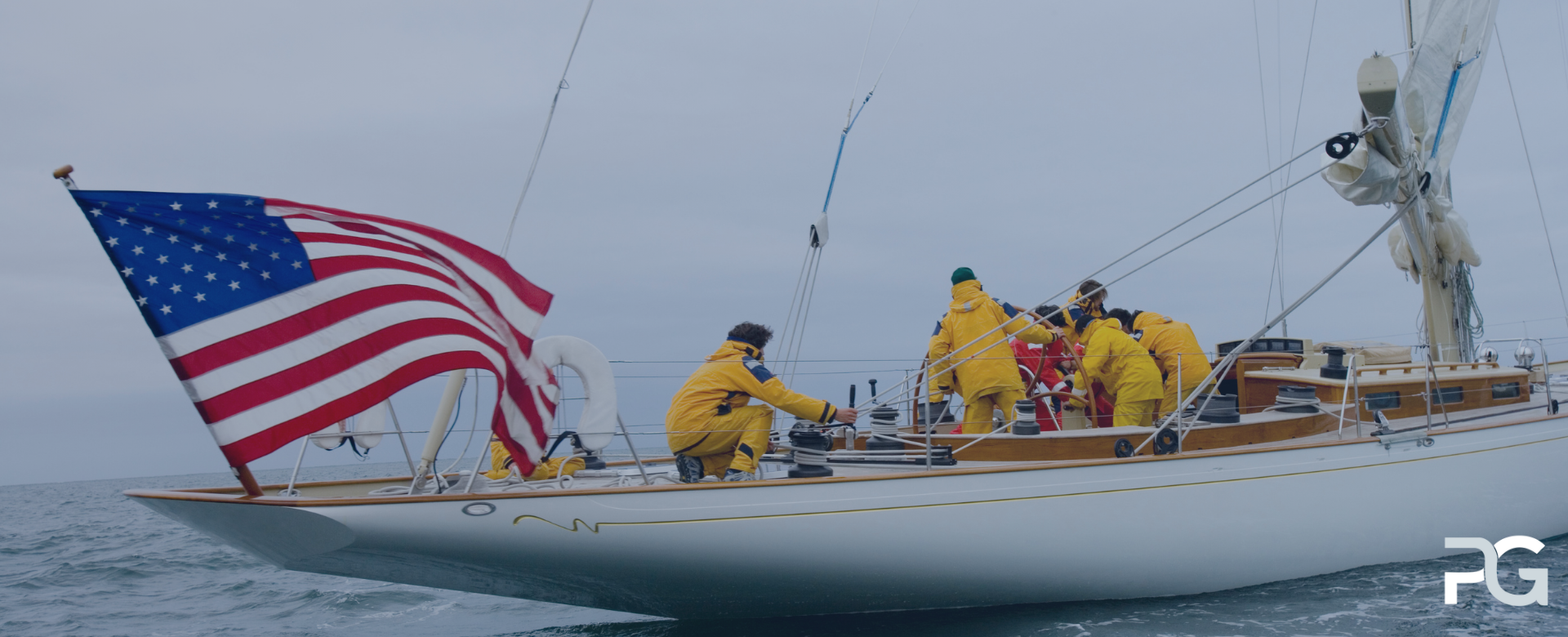
Jimmy Spithill’s leadership lessons from the America’s Cup and SailGP show how no-blame, high-accountability cultures accelerate performance under pressure on water or in business.
Spithill, one of the world’s top sailors, has skippered two America’s Cup champions and now leads the RedBull Italy SailGP Team as CEO. His “performance-first, straight-talking, hands-on” leadership formula turns extreme complexity into speed, clarity, and results.
Know Your Game
SailGP is to sailing what Formula 1 is to cars: condensed, high-stakes, and relentlessly fast. The 12 foiling catamarans in the league travel for weekends of racing at cities across the globe and fly over the water at 100 km/hour, with races lasting 10-15 minutes. Each six-person crew operates as one:
- Driver: steers and directs tactics
- Flight Controller: manages foils and rudders to keep the boat flying
- Wing Trimmer: adjusts the wing sail’s shape and power
- Grinders (x2): generate hydraulic power for control systems
- Strategist: monitors wind and competition in real time
Because all boats are identical, the difference is never the machine. It’s the people. Leadership clarity becomes the ultimate performance advantage.
Lead with No Blame, High Accountability
Spithill separates responsibility from finger-pointing. Every team member, including the driver, confronts mistakes candidly—without ego or defensiveness. As he puts it, “No one’s going to take it personally because the point is to get better.”
That’s how he builds trust strong enough to handle losing streaks, tough calls, and bad breaks. In his words, “It all works fine when you’re winning. But at high level sport, you just can’t win all the time. And so, the fact is, you’re going to go through some tough times, some tough races, tough decisions, whatever it is. And that’s when you really see the culture and the character of the team and the people.”
This mindset transforms accountability from something feared into something embraced. It turns setbacks into organizational learning.
Align Everything Around Performance
Spithill’s guiding question echoes Ben Hunt-Davis’s Olympic rowing question: “Will it make the boat go faster?”
When Team USA fell behind 0–4 to New Zealand in the 2013 America’s Cup, they made a pivotal move, replacing tactician John Kostecki with Sir Ben Ainslie. Spithill explained they had “two rosters” ready for contingencies. The switch rebalanced the team’s mindset without disrupting its rhythm. Sometimes it’s not enough to have the best team. Sometimes you have to have the best two teams.
After trailing 1–8, they won eight straight races and the Cup 9–8. The takeaway: focus on performance impact, not titles, pride, or politics.
Tell the Truth Fast. Respect Follows.
Spithill’s communication style is direct—some say blunt—but always about improvement, never insult. His clarity eliminates guesswork and builds mutual respect. Teams know exactly where they stand and what needs to change.
In SailGP, microphones capture every conversation between driver, crew, race directors, and coaches. Radical transparency forces concise, constructive exchanges. Just like the boats, messages travel faster. And so does the learning.
Model What You Expect
Spithill leads by doing, not directing. He trains with his crew, puts in more hours than anyone else, and gets his hands dirty on the docks. This hands-on leadership signals that no task is beneath him. Compliance becomes commitment because people follow what they see, not what they’re told.
Systematize Performance Under Pressure
At speeds over 100 km/hour, chaos is constant. Spithill’s teams stay composed because they rely on a system with preparation, feedback, and trust engineered into everything they do.
Here’s how that looks:
- Collaborative playbooks: Every maneuver is designed, discussed, and rehearsed using real-time data. Shared authorship builds ownership.
- The “No Dickhead Rule”: Psychological safety is mandatory. Toxic behavior gets no oxygen.
- Stress training: Practices simulate exhaustion and failure so that clear thinking becomes automatic under pressure.
- Trust in fundamentals: In crisis, they default to drilled checklists and pattern recognition, not improvisation.
- Continuous debriefs: Every race ends with open reviews to capture lessons immediately.
These routines convert chaos into consistency. They don’t remove risk; they make it manageable.
Channel Chaos into Control
SailGP is breathtaking to watch because it’s so controlled. That’s the paradox. The faster things move, the more discipline matters. Spithill’s leadership system transforms fear into focus. Confidence comes not from luck, but from practiced calm.
Apply the Same System in Business
High-performance sailing mirrors high-stakes business. Whether you’re an executive onboarding into a new role, leading a transition, pivoting after a setback, or driving innovation, the same blueprint applies:
- Build a no-blame, high-accountability culture.
- Align every choice with performance outcomes.
- Communicate truth early and clearly.
- Build in back-ups including your version of “two rosters.”
- Lead by example.
- Rely on systems and feedback to stay grounded under pressure.
To accelerate performance in your organization, do what Spithill does on the water: focus on execution first, speak plainly, learn continuously, and keep your crew aligned on what really matters.
In sport or business, performance starts with trust and ends with speed.