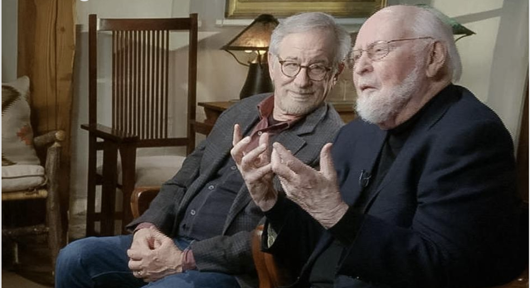
Even if you’ve never heard of John Williams, he has made your life better. His music is an integral part of movies including Star Wars, Jaws, E.T., Schindler’s List, Harry Potter, and Indiana Jones, enhancing those experiences for all. He is a true master of his craft with a different level of caring and sensibilities about music’s impact on storytelling.
Part of what got him there was his family heritage and innate talent. He built on that by learning about music, practicing like crazy, experiencing music in multiple ways, and soaking in all he could from a variety of masters of different crafts.
Family heritage and innate talent
Williams’ father was a jazz drummer. His mother was a dancer. His parents’ friends were musicians. Their home was always filled with music and musicians. He and all his siblings studied music. It was just a part of who they were. He inherited a talent for music. His family nurtured it, giving it every opportunity to grow.
The lesson for you is not to fight the tide. Nurture your natural instincts. People generally enjoy things for which they have an innate talent. Embrace what comes easy and what you enjoy.
Musical learning
Williams was an avid student of music, getting piano lessons and studying music at UCLA, Los Angeles City College, and Juilliard in New York. He learned to play multiple instruments including piano, trombone, ukelele. He learned about harmony and orchestration and studied late Romantic and Modern music. It’s no wonder that his movie scores were so lush and complex, often performed by full symphony orchestras.
Invest in learning – all kinds of learning: book learning, class learning, workshop learning, learning about things you’re not sure you need to learn about, and especially learning about things you already know about. Because you can never learn all there is to learn.
Practice like crazy
As Williams said in the wonderful celebration of his life and work, “Music by John Williams,” he practiced piano several hours a day, and “all day” on weekends. He said it was more akin to athletic training than normal practice. Later in his career he wrote every day consistently for years.
It’s like the old joke: How do you get to Carnegie Hall? Practice. Practice. Practice. Give yourself the opportunity to practice skills. Be disciplined about it. Be devoted to it.
Diverse experience
Williams claims he never planned to be a film composer. He worked as a jazz pianist, then studio musician on film and television scores. Along the way, people asked him to orchestrate short pieces, then conduct some sessions. At one point he helped with music editing.
Embrace diverse experiences and intelligent failures as essential steps in building your own strengths.
Soak in what other masters have to share
Early on Williams worked under legendary film composers like Alfred Newman and Franz Waxman. Later in his career he collaborated with some of the world’s great musicians like Yo Yo Ma and Itzhak Perlman. Perhaps his greatest, most enduring collaboration was with Stephen Spielberg, partnering with him on the music side of his storytelling. That was his cause – storytelling.
He used leitmotifs to tell stories, writing specific themes for different characters, places, or ideas. As Spielberg said, in Indiana Jones, even the individual snakes had themes.
Williams was always trying to get better. When something he composed didn’t match the film director’s vision, he adapted. When he first saw Spielberg’s Schindler’s List, he told Spielberg the film was amazing and that “You need a better composer than I am for this film.” Spielberg replied, “I know. But they’re all dead!”
The minute you think you’re a master, the only way to go is down. Instead, devote yourself to a worthy cause and the pursuit of mastery.
Implications for you
- Embrace your innate talents and build on those. Don’t try to be what you’re not.
- Invest in learning to acquire knowledge – books, courses, workshops and the like.
- Practice to build skills – often on your own.
- Be open to a wide range experiences in projects, assignments, roles including some that push you in new directions.
These are the four components of strengths: innate talent, learned knowledge, practiced skills, and hard-won experience. If, and only if you want to go to the next level, then
- Spend time with master craftspeople to develop craft-level caring and sensibilities for a cause that matters to you.