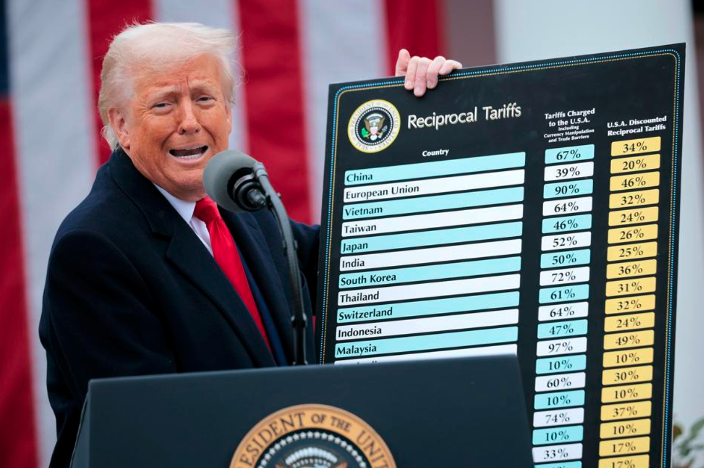
The world changed last week. Pretty much all the historical evidence indicates the increases in tariffs are going to lead to major trade disruptions and higher prices. Every leader of every organization should be asking: What changes most impact us directly and indirectly? So what are the implications of those changes for us? Now what should we do next?
Overall, you likely want to use these changes in the world as a catalyst for a point of inflection to drive the things you need to do to secure your base and move towards your future aspirations. That probably means: 1) Doing things to reinforce and accelerate the cultural changes you already have in flight; 2) Reconsidering your main strategic choices; and 3) Making sure your tactical leaders can flex within your cultural, strategic, and operational boundaries to mitigate issues and take advantage of emerging opportunities.
Remember that how you nest cultural, strategic, and tactical leadership fuels competitive agility.
- Cultural leadership: Who you are and what you stand for
- Strategic leadership: Arranging resources before deployment
- Tactical leadership: Deploying and adjusting resources in real time
Reinforce and accelerate cultural changes
There’s a whole range of different ways to define and look at culture from Seth Godin’s simplistic “People like us do things like this,” to the most sophisticated analyses. A middle way is to identify aspirations for Behaviors, Relationships, Attitudes, Values, and Environment (BRAVE,) the current state of those, and then focus on evolving a couple of measures at a time. One set of dimensions might look like this:
Note the third value flows from your organization’s core focus: Innovation for design-focused organizations, customer-centricity for service-focused, collaboration for delivery/distribution-focused, and accountability for production-focused.
The point here is that who you are and what you stand for should not change even with a major market reset. The choices you make and the way you act can change; but if you’re prepared to change what you stand for, you don’t really stand for anything.

Reconsider your main strategic choices
Ideally, your strategic choices flowed from a comprehensive strategic planning process in which you:
- Set an aspirational destination (derived from your mission and vision).
- Assess the facts of the current reality and develop potential future scenarios.
- Identify options to bridge gaps between the current reality and the aspiration.
- Evaluate options under different scenarios. Make primary and back up, contingency choices.
- Develop detailed plans that will deliver on selected strategies and priorities.
- Act, measure, adjust, and repeat.
These tariffs should not have been a complete surprise to anyone other than the penguins on Heard Island. If you factored them in to your situation assessment and built contingency plans for their actually happening, good for you. If not, their implementation changes the facts of your current reality. That’s going to change the assessment of your options, which in turn may change your choices.
It’s worth asking the question and reconsider things even if you decide not to change your strategies.
Make sure your tactical leaders can flex within your cultural and strategic boundaries
Ideally, you’ve built enough Tactical Capacity into your organization for your people to be able to flex within preset boundaries to mitigate the issues and take advantage of the emerging opportunities resulting from the tariff increase.
In contrast to other work groups that move slowly, with lots of direction and most decision-making coming from the leader, high-performing teams with strong tactical capacity empower each member, communicate effectively with the team and leader to create critical solutions to the inevitable problems that arise on an ongoing basis and to implement them quickly.
High-performing teams benefit from strong delegation including:
- Inspiring Direction: Objectives/desired results/context/intent – what and why
- Enabling Resources: Financial, information, technical or operational, people, time
- Empowering Authority to make mission tactical decisions within cultural, strategic, and operational boundaries/guidelines/intent
- Credible Accountability and consequences (standards of performance, time expectations, positive and negative consequences of success and failure)
This is where the three points come together.
- At the cultural, mission, and vision levels, things should most likely continue to evolve as they have.
- Strategically, things may change, giving your tactical teams’ new direction and resources.
- Tactically, teams must be empowered to make decisions within those cultural, strategic, and operational boundaries; and then be accountable for delivering the right things the right way.