What CEOs Must Do To Avoid The 83% Of Mergers And Acquisitions That Fail

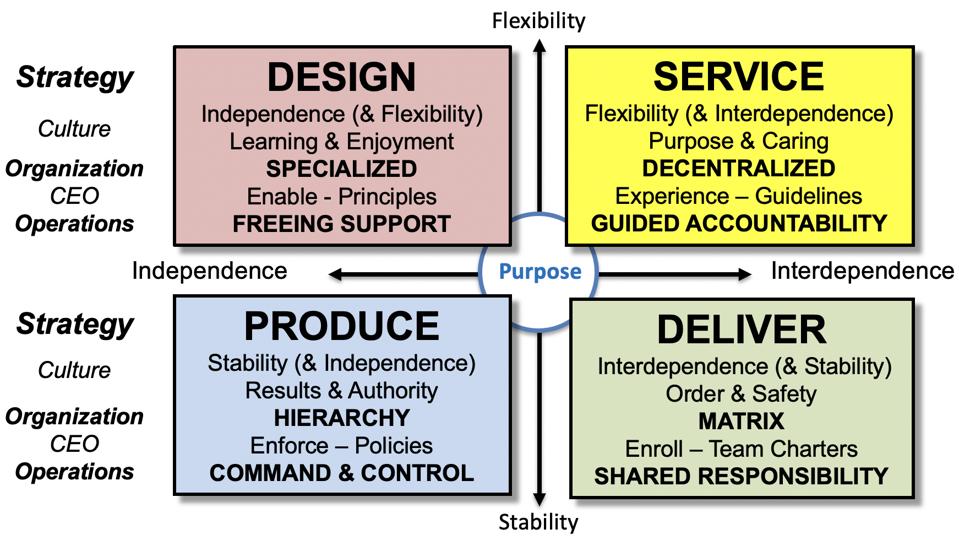
The #1 job of a CEO is vision and values. That true for mergers & acquisitions (M&A) as well. Owning the vision means making sure the tactical merger & acquisition choice matches the overarching company strategy. Owning the values means making sure the merger or acquisition is culturally accretive. Since 83% of mergers & acquisitions fail, we know most CEOs don’t get this right. Coupling that with knowing that 70%+ of value creation for growth-oriented private equity firms comes from inorganic growth leads to the conclusion that those that do get this right reap oversized rewards. Own the vision If you as the CEO have M&A as a strategy you don’t have a strategy. Mergers & acquisitions are not strategies. They are tactics. To be fair, they are very powerful tactics to accelerate through a strategic point of inflection. But if they aren’t tactics in service to an overarching strategy, they are doomed to fail – as is the case 83% of the time. As described in What it Takes to Accelerate Through a Strategic Inflection Point, and my book, “Point of Inflection” (request an executive summary,) there are only four over-arching strategies: design, produce, deliver and service. The only viable path to a successful merger & acquisition runs through one of those strategies.
  • If your strategy is design, target mergers & acquisitions that enable design.
  • If produce, target mergers & acquisitions that enforce production.
  • If deliver, target mergers & acquisitions to enroll others in delivery – knowing that strategic alliances often work better here and always have less risk.
  • If service, target mergers & acquisitions to enhance your customers’ experience.
You’re all nodding your heads thinking, “of course.” Virtually all of the 17% of successful mergers & acquisitions start here. At the same time, one of the leading causes of failure for the 83% that fail is strategic mis-fit. So at least some of you are going to forget this lesson when offered an exciting merger or acquisition opportunity. CEOs that forget this lesson get suckered in by pitches like:
  • “Complementary strengths” – which, almost by definition means they have a different strategy.
  • “Gives us scale” – valuable only if the scale fits your strategy.
  • “Access to new markets” – valuable only if the markets fit your strategy.
  •  “New products” – valuable only if they fit your strategy.
Get the point? As CEO, own the vision. Own the mission. Own the strategy. Merge or buy only if it fits your strategy. (Of course, the equation is different if someone’s merging you in or buying you in. If your firm doesn’t fit their strategy, expect a value transfer from their shareholders to yours – and make sure you cash in your shares as soon as practical before the merger or acquisition fails as it likely will.) Own the values As I’ve written before, when you merge cultures well, value is created. When you don’t, value is destroyed. Arguable, the root cause of every merger’s success or failure is culture. The good news is that the path to merging cultures well is rooted in the strategic choice. So, if part I is targeting mergers & acquisitions that enhance your strategic choice, part II is targeting organization that have a culture that matches both the strategy and the culture. At their essence,
  • The most effective design-focused organizations have cultures of independence, learning and enjoyment. Lead them with principles as the chief enabler.
  • Production-focused organizations have cultures of stability, results and authority. Lead them with policies as the chief enforcer.
  • Delivery or distribution-focused organizations have cultures of interdependence, order and safety. Lead them with team charters as the chief enroler.
  • Service-focused organizations have cultures of flexibility, purpose and caring. Lead them with guidelines as the chief experience officer.

Merge the cultures as soon as practical. If you don’t think you need to integrate them, you shouldn’t be merging them in or acquiring them in the first place. Of course this merger or acquisition will help you evolve your overall culture. You need to do that to lead through a strategic point of inflection. But do it deliberately, owning the new vision and values yourself. That’s how you avoid the 83% of mergers & acquisitions that fail. Click here for a list of my Forbes articles and a summary of my book on executive onboarding: The New Leader’s 100-Day Action Plan.

Read More Articles

Board meeting with the CEO
Why the Best CEOs Start Board Meetings With One Simple Sentence

Most board meetings don’t fail because of bad data. They fail because of unclear expectations—especially about how directors should feel when they leave the room. Too often, management teams present…

Read Article
White-water rafting team navigating strong river rapids with teamwork and coordination.
Recalibrating Your Own BRAVE Leadership in Turbulent Times

Leadership is most effective when it turns other‑focused intent into disciplined, everyday action in an ever-changing world. Take this moment to recalibrate how you are leading to sharpen both your…

Read Article
Team meeting
The Hierarchy of High Performance: Defining Ways of Working by Level

Use this approach to make your ways of working more disciplined, consistent, and effective by level, remit and choices, and systems and tools: Level, Remit and Choices:  Board – governance…

Read Article
Team work
How to Build Tactical Capacity: Moving from Individual to Team Proactivity

The secret sauce in tactical capacity is proactivity as a team because it is not about a few heroic individuals taking initiative; it is about a team that reliably sees…

Read Article
Leading Through the Next AI Wave By Turning Uncertainty Into Innovation

When it comes to Artificial Intelligence, many leaders are dealing with the same uneasy question: Where’s the return on all this AI investment? According to Dr. Mehdi Nourbakhsh, CEO of…

Read Article
walt disney
Other-Focused Corporate Innovation: How Leaders Spark Creativity Beyond Themselves

Innovation fails when leaders make it about themselves. The most transformational breakthroughs come when leaders make it about others—their teams, customers, and the shared story that gives the organization meaning.…

Read Article