Covid-19 will have both temporary and enduring effects. It is both a crisis to be managed and a cause to hit a restart button to get yourself and your organization ready for the new normal. How you onboard into a new organization in the new normal is one particularly important part of that – and especially how you connect with people working remotely.
A million years ago, we tracked the evolution of individuals’ healthy behavior as part of understanding Puritan Cooking Oil’s consumers. We learned:
- Most people generally increase their propensity for healthy behavior and decrease their propensity for unhealthy behavior over time – normal evolution.
- Some people experience a health trigger event causing them to adopt a whole bunch of healthy behaviors quickly – point of inflection.
- At some point, those people get fed up with all the new healthy behaviors and drop back – point of defection.
- But they drop back to a level higher than they had been tracking to and increase their propensity for healthy behavior from then on at a faster pace than before – new normal.
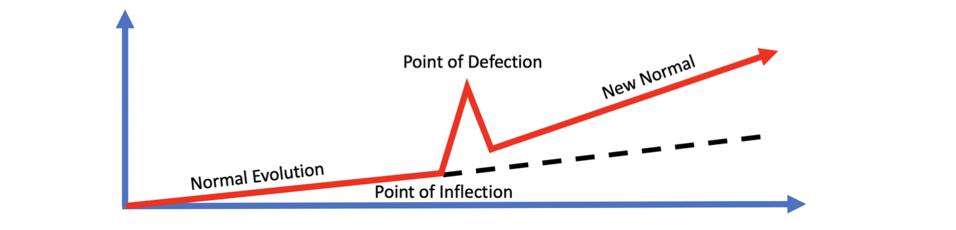
The New Normal
BRADTSome of the health trigger events were obvious and some were surprising. There were positive events like the birth of a child and negative events like medical diagnosis or sudden illnesses for them or others. One of the most impactful events was a 25th high school reunion. People got a save the date for their reunion and immediately said “I’m not showing up looking like this.”
Expect Covid-19 to have a similar impact. We’re experiencing a whole bunch of changes right now. When it’s over, we’ll drop back to a new normal that will be different than what we had been heading for. This is almost certainly going to be the case with the digital/online shift, and our approaches to health and safety, and risk management and contingency planning.
Digital/Online Shift
The shift to digital and online has been dramatic. By the first week of April, the Commerce Department reported that online U.S. retail sales was higher than general merchandise sales for the first time ever. Separately, 9% of people polled by CNBC said they worked from home before Covid-19. Now it’s 42%.
These numbers will never go back to their pre-Covid-19 levels, with huge implications for retail, offices and real estate. Witness Facebook’s move to let many employees work from home permanently.
Given that, make sure you’re prepared to achieve success in the “Work from home” age. Part of getting a head start in a new job is now getting up to speed on your new organization’s technology platforms. Make sure you can connect with people working online in the way they are used to connecting.
And then do it. Get a head start on your new relationships by connecting with people even before you start.
Health and Safety
Many of the Covid-19 restrictions are temporary. People will eventually take off their masks, get within six feet of each other and maybe even shake hands.
In any case, this experience has to change everyone’s attitude to health and safety. We all know how fragile things are and how fast they can go bad. Health and safety concerns are going to be much more front of mind in future planning endeavors and ways of working.
Part of this goes to your situation assessment. As you look at customers, collaborators, capabilities, competitors and conditions, make sure to consider the temporary and enduring impact of Covid-19 on all of them. And make sure to consider the possible impact of future health and safety concerns and make them part of your own communication.
Risk Management and Contingency Planning
Almost everyone was surprised at how fast the supply chain collapsed and demand evaporated. Too many companies had gone too far down the road of single-source, just-in-time supply or relied on a few customers or a few types of customers. They had no back up or contingency plans.
Never again. Going forward all of us are going to pay more attention to risk management and have back-up contingency plans. Shame on you if you don’t have a backup plan for everything. Perhaps the most important lesson we’ve all learned is to prepare for the unexpected.
Click here for a list of my Forbes articles (of which this is #640) and a summary of my book on executive onboarding: The New Leader’s 100-Day Action Plan.