How Naming Jane Fraser CEO Advances Citibank’s Client Focus

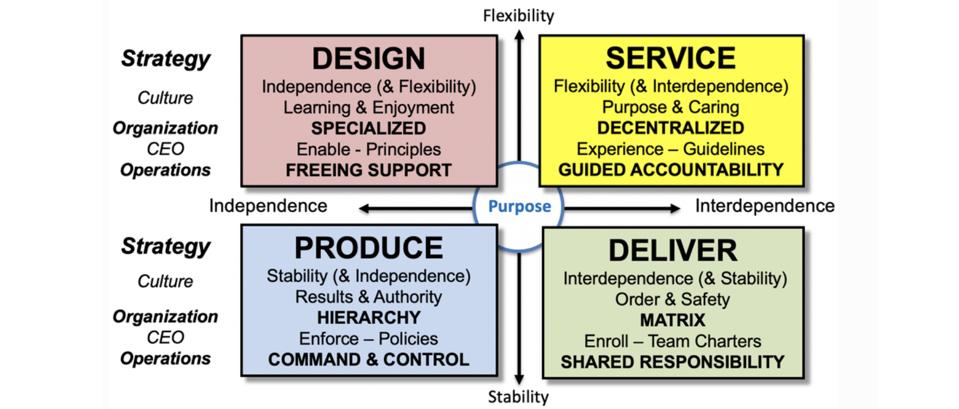
Ultimately, all banks are in the client service business. Their product, money, is the ultimate commodity in that its value is literally written on its face. While that can design new services, and enroll interesting partners, they ultimately win or lose based on the quality of their clients’ experiences. Citibank recruited, developed and has now named Jane Fraser as its next CEO to give them an advantage in that area. Citi’s Michael Klein spent “several years” trying to get Fraser to join Citibank, finally succeeding in 2004. He did this not because of her experience at Goldman Sachs, Asesores Bursátiles, or McKinsey, not because of her Harvard MBA, but because of what she had learned researching and writing her book, “Race for the World: Strategies to Build a Great Global Firm.” What she had learned was empathy. She researched this book by traveling around the world and interviewing McKinsey clients about their challenges. At the same time, she was working part time to spend time with her young children. The combination gave her a rare perspective range from global to as personal as it gets. Then Citi moved her through a series of positions that allowed her to build knowledge and skills, heading up client strategy, mergers and acquisitions, the Private Bank, CitiMortgage, US Consumer and Commercial Banking, Citigroup Latin America, Global Consumer Banking. She’ll take over as CEO with the talent, knowledge and skills required to steer the bank out of the pandemic and through the uncertain future we all have to deal with. Different CEOs for different needs. There are all sorts of good lessons here. You have to be impressed with the way Jane Fraser has managed her career. You have to be impressed with the way she balanced her family and work. You have to be impressed with Michael Klein spotting her talent and sticking with it to convince her to join Citi. You have to be impressed with the way Citi nurtured her. And you have to be impressed with Citi’s matching the person and the task. Fraser is a great choice for CEO of a service company. She would be less valuable in a design, production or distribution-focused company. The “E” in CEO is different for different companies. Design If your organization is design-focused, like Apple, you win by out-innovating your competition. The CEO has to be the Chief Enabler. They have to give the most important people in the company – the designers – freeing support. The CEO’s job is to protect those designers from all the corporate weenies trying to restrict their freedom. The CEO will do battle on behalf of the designers with a never-ending parade of lawyers, accountants and engineers constantly trying to limit the damage those designers do. Because, of course, innovation requires damaging the status quo. Produce If your organization is production-focused, like coal mining companies, you win by being more efficient than your competition. The CEO has to be the Chief Enforcer. They have to make sure everyone follows the policies. In some ways, this is the most straightforward of all CEO roles as these organizations operate best with command and control hierarchies. The CEO sits at the top, dictates policies, pushes stability and makes sure things happen the same way every time. Deliver If your organization is delivery-focused, like Amazon, you win by building a better network. The CEO has to be the Chief Enroller, bringing people into the network. The challenge here is that the matrix, by definition, includes people outside the company. The CEO has no control. They have to push interdependence. They have to drive shared responsibility. Service If your organization is service-focused, like Citibank, you win on the dimension of customer experience. The CEO has to be the Chief Experience Officer, guiding decentralized service providers. The key words here are guided accountability. Each customer and client is different. Each has a different experience. They judge organizations by the person providing them their service. So, the service providers need flexibility. But it needs to be guided to align with the organization’s mission, vision and points of differentiation. Different groups within any organization will have different remits. Citibank’s compliance group is a production sub-group. Their job is to enforce policies. In some ways, all CEOs must be part enabler, part enforcer, part enroller, and part chief experience officer. Different CEOs just need to do those with different priorities. Click here for a list of my Forbes articles (of which this is #659)and a summary of my book on executive onboarding: The New Leader’s 100-Day Action Plan.

Read More Articles

A large crowd of people seated closely together, viewed from behind, attending an event or presentation in a dimly lit venue.
The Stakeholders You’re Not Thinking About – And Why They Can Derail Your First 100 Days

Cracker Barrel made headlines when its relatively new CEO departed after less than two years in the role they were hired to transform. The reasons were complex, but one thread…

Read Article
A person holding a clipboard with a blank sheet of paper and a pen poised to write
Outcome-Based Governance: Aligning Policies, Guidelines, and Principles

Policies channel compliance. Guidelines invite contribution. Principles earn commitment. Start with how you want people to behave at work and then design your governance stack to reinforce, not inhibit that.  Three…

Read Article
Concept image of human brain made of blue and gray paint brushes
The Neuroscience of Leadership: Accelerating Growth Mindset and Enterprise Performance

Organizations’ futures depend less on what their people know today than on how fast they can learn, adapt, and execute tomorrow. Building on Carol Dweck’s Growth Mindset – the idea that abilities can be…

Read Article
A group of professionals collaborating.
Everything Communicates: Especially As and To an Executive Onboarding into a New Role

Everything communicates. Everything you say and don’t say, do and don’t do, and the order in which you say and do it sends a message. The same is true for everyone around you. As an executive onboarding into a…

Read Article
Group team working in a office.
Designing The Right Offsites for Different Leadership Levels

Offsites can be rocket fuel or expensive theater. One difference is whether you design each for the kind of leadership each level needs to provide: cultural, strategic, operational, or tactical. When you nest your offsites to fit those roles, you…

Read Article
Argentina flag with the body shape of the country in soccer field.
Strategic Adaptation in Leadership: Lessons from the Argentina–England World Cup Semi-Final

The Argentina–England World Cup semi-final was not just a game; it was a live case study in how leaders deploy strategy and tactics—and what happens when they fail to adjust…

Read Article