A long time ago in a galaxy far, far away, people worked together in the same physical space. They could all look at the same things in the same dimension at the same time and use words, tone and body language to communicate. Now workers are scattered all over the universe and suffer from the associated barriers to communicating and working together. Many of the highest functioning teams have substituted virtual team rooms for physical team rooms. Making that work requires both a technical solution and a mindset of mutual support.
N.B. This applies only to teams – people with complementary strengths, committed to each other, working interdependently to realize a shared purpose. Work groups that do not have to work interdependently don’t need this.
You will need a technical platform for your virtual team room. It could be as simple as Basecamp, which CTOs seem to rave about, Google docs, Office 365/Sharepoint, Trello, Mavenlink, or one of the various collaboration tools rated here. The best tools will facilitate accountability and cohesiveness.
You will also need a mindset change. For some of you, the most important attitude shift is from taking criticism as an attack to assuming positive intent from a teammate trying to contribute to your own personal growth and success.
Let’s look at the four components of a high-performing team I just suggested:
Complementary strengths: Forget everything you’ve ever heard about a team being only a strong as its weakest link. That’s only true if team members don’t back each other up and fill each other’s gaps with their complementary strengths. Complementary strengths are only complementary if they balance a complementary weakness. Otherwise they’re redundant strengths.
Committed to each other: Katzenbach and Smith first made this point over 25 years ago in The Wisdom of Teams. They argued the fundamental difference between working groups and teams is interdependence. Then, the difference between a “Real Team” and a “High Performance Team” is that they are “deeply committed to each other’s personal growth and success.”
Working interdependently: Football’s New England Patriots’ quarterback Tom Brady makes just that point. His passes are useless until his teammates catch them. And they don’t even get thrown without protection from the front line. Professional singles tennis players are independent on the court. Professional quarterbacks only succeed if their teams succeed.
Realize a shared purpose: This purpose should be meaningful and rewarding. It should be good for others, leverage the team’s combined strengths so the team as a whole is good at it, and be good for the team.
That mindset allows the team to leverage the value of team room or virtual team room tools. Here is one approach. Whatever platform you choose will have its own tools and forms. Use those. Just make sure they accomplish the same things guided by a team leader and project manager.
Start with three boards: 1) a plan board, 2) an insights board, and 3) an action board.
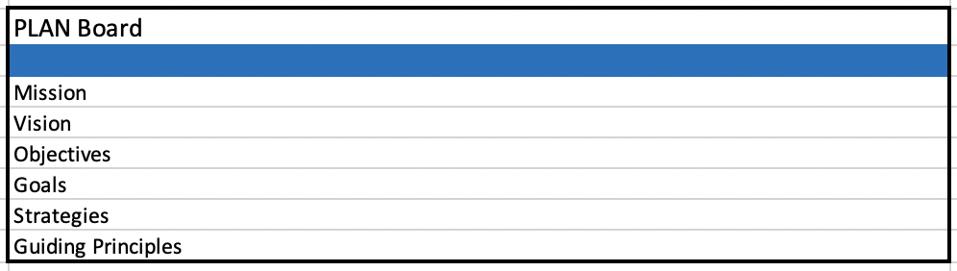
Plan Board
BRADTThis board won’t change. It’s there to remind everyone about the shared purpose.
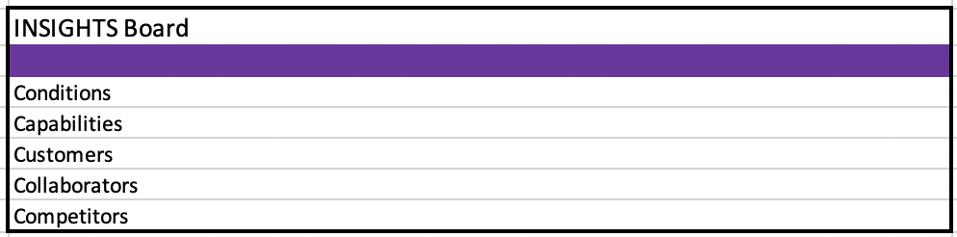
Insights Board
BRADTEver-improving and evolving insights about the key players and the situation.
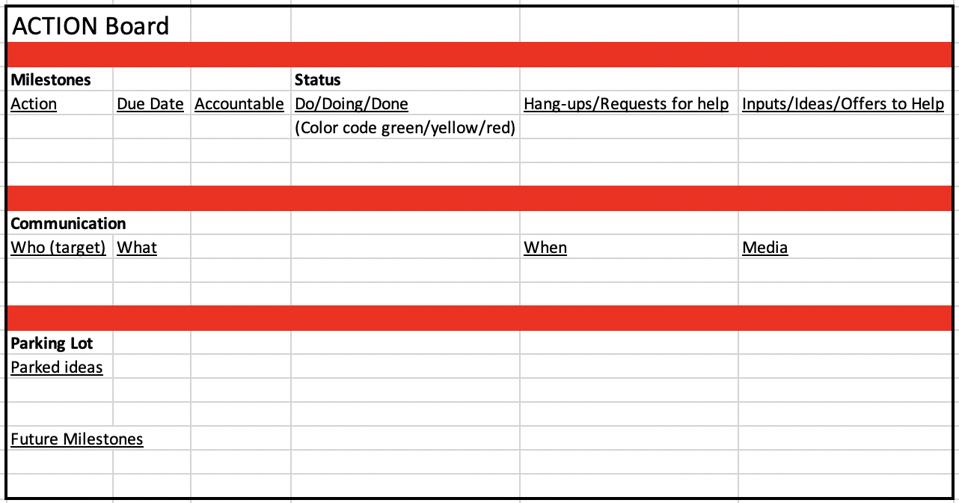
Action Board
BRADTThe Action Board is the heart of the game and includes:
- Milestones – Action, due date, accountable
- Status – Do/doing/done (perhaps with green/yellow/red highlighting to make it easy to see where things are going well and less well; hang-ups/requests for help; inputs/ideas/offers to help
- Communication – Who (target), what, when, media.
- Parking Lot – Parked ideas, future milestones
This board is continually updated – at meetings and between meetings. It should always have the most current information. Important team meetings should be held around this board live or virtually so everyone is looking at the same things at the same time cohesively.
Net, the team room, virtual team room and its Plan, Insight and Action boards help teams communicate, collaborate and deliver together.
Click here for a list of my Forbes articles (of which this is #656) and a summary of my book on executive onboarding: The New Leader’s 100-Day Action Plan.