[et_pb_section fb_built=”1″ admin_label=”section” _builder_version=”3.22″][et_pb_row admin_label=”row” _builder_version=”3.25″ background_size=”initial” background_position=”top_left” background_repeat=”repeat”][et_pb_column type=”4_4″ _builder_version=”3.25″ custom_padding=”|||” custom_padding__hover=”|||”][et_pb_text _builder_version=”3.27.4″ module_alignment=”left”]
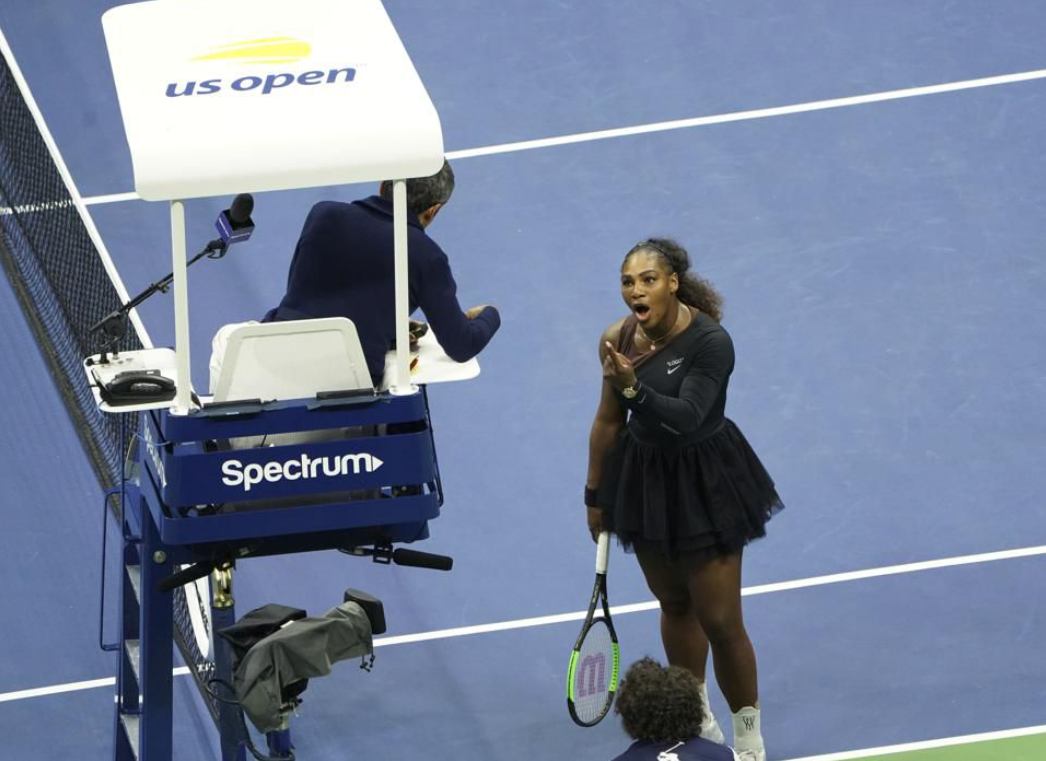
Serena Williams’ reactions to the umpire’s calls in her U.S. Tennis Open final certainly cost her a point and a game and perhaps the match and title. Don’t do what she did. You can’t control some events. But you can, and must, control your reaction to events.
First Serena received a warning from the umpire for receiving help from her coach in the stands. Then, she slammed her racquet, broke it, and received a one-point penalty. Then she demanded an apology from the umpire and calling him a “thief.” He gave her a one-game penalty for “verbal abuse.” Then she lost the set and the match.
Many are asking whether the first warning was “fair.” Whether or not it was fair, it happened and Serena paid a material cost for her reaction.
Things are going to happen to you that you do not think are fair. You are certainly entitled to your own opinion about those events’ fairness and probably can’t control how you feel. Do understand there are consequences to how you choose to react. The strong suggestion is to stop and consider those consequences before deciding on your reaction. You might choose to:
- Not react at all.
- Register a polite objection and get on with what you were doing.
- Have a reasonable debate about the issue.
- Go to Defcon 1 and unleash the full power of your feelings.
- Walk away.
It is truly a choice.
- Not reacting at all allows all to get back to what they were doing with minimum disruption. But there are no negative consequences for the person that did the unfair thing. Expect no change in the likelihood of it happening again.
- A polite objection makes others aware of how you feel which may reduce the likelihood of it happening again.
- A debate allows people to understand how you feel, but may be more of an immediate distraction than it is worth.
- Defcon 1 will ensure people know how much you care about the injustice. It will make them consider future actions more carefully, but may cost you a point, game and match.
- Walking away ends that interaction and perhaps your relationship.
There is no right answer. Perhaps Serena knew exactly what she was doing. Perhaps she was fighting for a higher purpose. Perhaps not. Be clear on what matters to you and why so you know if the slight is mortal, damaging or no big deal and react accordingly.
[/et_pb_text][/et_pb_column][/et_pb_row][/et_pb_section]