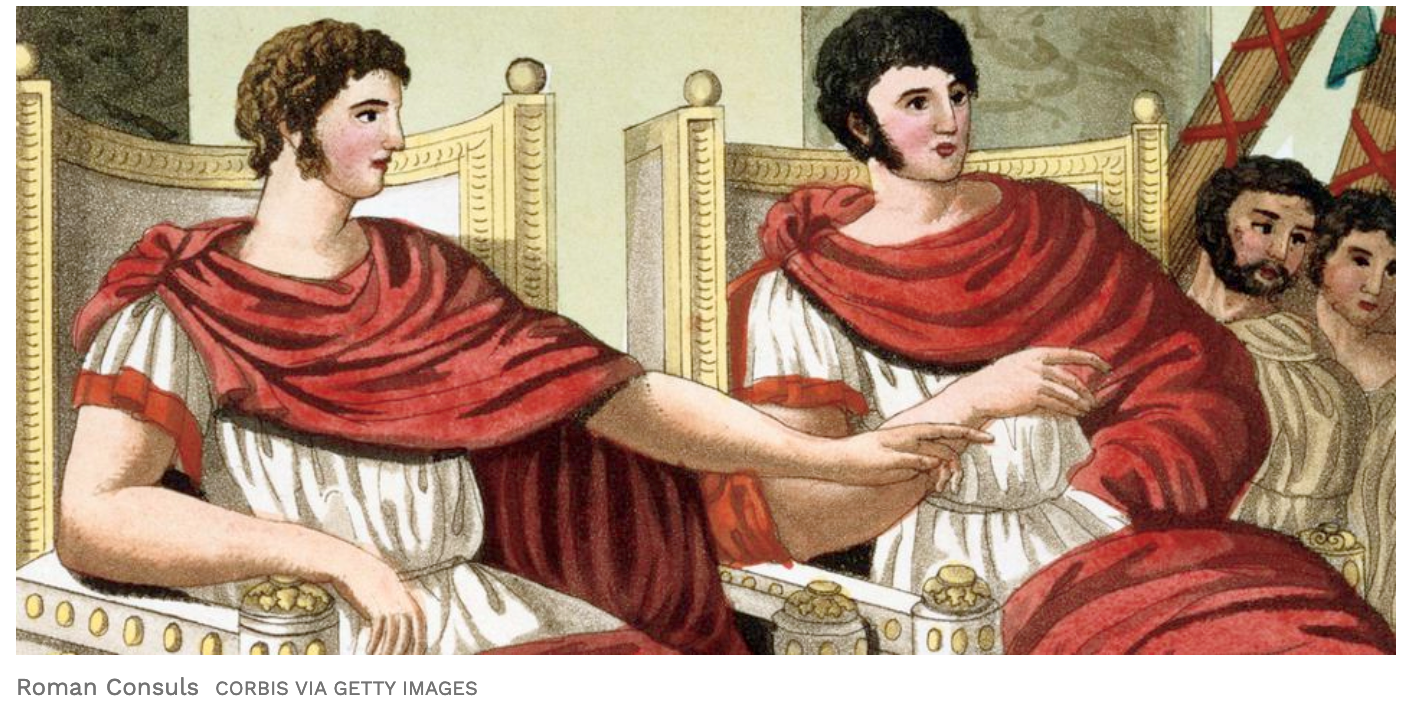
Some partnerships like dual Roman Consuls, William Procter and James Gamble (P&G), and Bill Hewlett and Dave Packard (HP) were extraordinarily successful. Other partnerships failed miserably at places like Deutsche Bank, Citibank, and Martha Stewart Living. When it works, it works because partners share a vision and set of values, and make the best of each other’s complementary strengths.
As I wrote in SalesForces’s naming Co-CEOs, partners need to answer five questions together: 1. context, 2. what matters and why, 3. how to win, 4. how to work together, 5. what to do separately and together. Let’s dig into those.
1. What is the context for your co-leadership assignment? What’s the problem for which this is the right solution?
In their HBR article “Is It Time To Consider Co-CEOs?” Marc Feigen, Michael Jenkins, and Anton Warendh suggest co-leaders are right for organizations “shifting decisively toward agile-based management and for those embarking on technology-based transformations.”
And, as I wrote in Fox News placing its bet on two heads, choose co-leadership in more complex situations when you need more perspectives, and single leadership when you need to move faster.
2. What really matters and why to you, your co-leader, and the organization?
This goes to vision and culture.
Feigen suggests co-leadership works well when the co-leaders operate as true partners with the same picture of success and “fully shared accountability” with equal, shared rewards.
Culture is the collective character of an organization. Individuals have character. Those people, starting with co-leaders, come together to create an organization’s culture. When co-leaders are deliberate about the traits they want to model and engender and do so, things work better. But when they are at odds with each other, that flows through the whole organization.
3. The most critical choices around how to win together.
The critical choices around how to win together are the heart of an organization’s strategy, guiding every other decision the organization makes.
Feigen talks about the need for “An appearance of unity.” They go on to say, “Even when co-CEOs have a difference of opinion, they need to speak to their employees with a common voice, because disagreement among coequals can lead to confusion and indecision throughout the organization.”
Co-leaders must agree on the core focus of the organization: design, production, delivery or service, the priorities that flow from that and the critical enablers.
4. How you two are going to work together and communicate with each other and the rest of the organization.
Four of Feigen’s nine key factors for success go to this point including:
- Willing participants who see the benefits of having two heads
- Clear responsibilities and decision rights
- Mechanisms for conflict resolution
- Board support
On the one hand, co-leaders have to be clear about which decisions they are making together and which decisions they are making separately. On the other hand, they need to evolve that framework constantly as their organizations evolve. This means they need to spend time together. Whether it’s a daily phone call or weekly dinner, they need to talk to each other – lots.
Different partners have done this differently. At Apple, Wozniak owned all the technology decisions. Jobs owned all the consumer-focused decisions. At Disney, Michael Eisner owned all the creative decisions. Frank Wells owned all the financial and operating decisions. Ernest and Julio Gallo split manufacturing and marketing. There is no one right way. Just be clear on your way so those following you know how to get things done.
5. What each of you is going to do on your own and together.
Feigen calls these “Complementary, distinct skill sets.” It goes deeper than this. Strengths are made up of innate talent, learned knowledge, practiced skills, hard-won experience, and apprenticed craft-level caring and sensibilities.
Different people have different talents, knowledge, skills, experience, and sensibilities. The best partners seek out, value, and leverage their partner’s differential strengths. so they and the organization can learn from each other and grow together. Poor partners let those differences divide them and their organizations.
Finally, as I noted in “How to Beat the Odds and Make Equal Partnerships Work,” even when partnerships work, they may not work forever. Be ready for that.
Click here for a list of my Forbes articles (of which this is #799) and a summary of my book on executive onboarding: The New Leader’s 100-Day Action Plan.