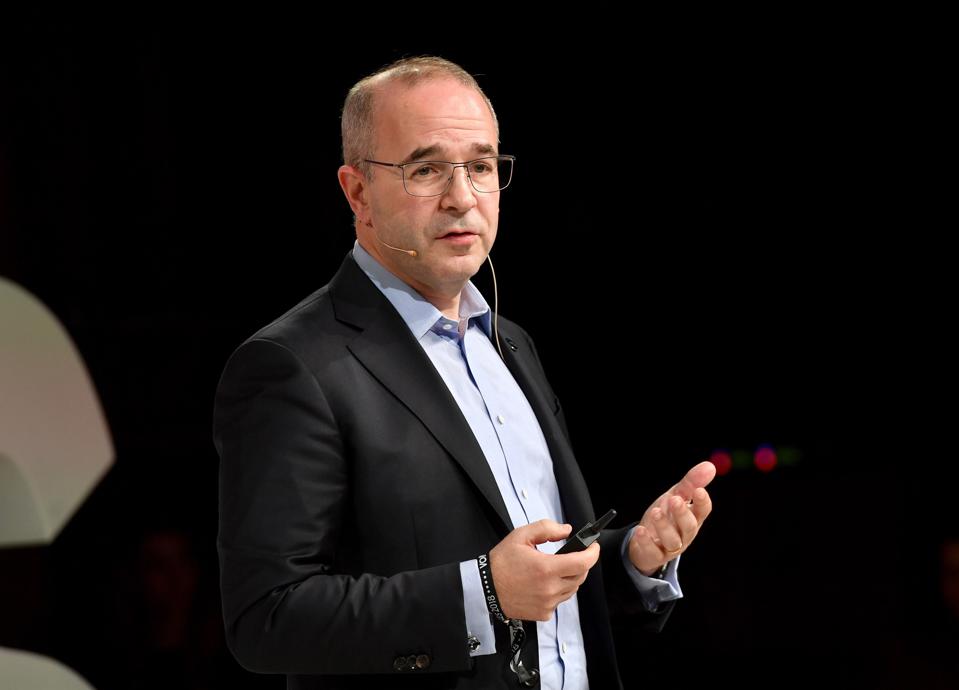
Most change agents don’t survive their own change. McKinsey’s Global Managing Partner, Kevin Sneader either forgot that or ignored it and is paying the price as the first head of McKinsey in decades not to get reappointed for a second term.
As the WSJ’s Scheck and Fuhrmans put it, Sneader responded to McKinsey’s recent crises, including its roles in pushing OxyContin, Juul, and Saudi Arabian politics, by “moving McKinsey from a culture that relied on individual partners’ judgments to one based on systems, rules, and processes.” If, as Deming put it, culture eats strategy for breakfast, it eats change agents as mindless snacks.
Sneader’s ouster should not have been a surprise. Let’s compare his case to the framework laid out in my previous article on What Change Leaders Must Do To Survive Their Own Change Initiatives
The fundamental premise is that even though people rationally understand that change is necessary, the change process is often so painful emotionally and so many “good” people have to go away that the change agent becomes an ongoing reminder of bad times. Stepping into the brighter future requires a new leader. Change agents that do survive their change either lead an evolutionary change or have a fall guy.
Fall Guy
If you’re going to shock the system and you want to survive, you need a fall guy to be the voice of the change, manage processes and get publicly hung to signal the end of the change. This could be an outside consultant (from a place like McKinsey) or a trusted lieutenant that you bring in on a temporary basis. In either case, be clear with them that their job is to manage the change and then go away, compensated appropriately, so you can tell everyone how glad you are they are gone and get back to the new normal.
Sneader failed to set up a fall guy and therefore had to take the fall himself.
Cultural Evolution
The key to successful cultural evolution is pulling the right levers in the right order in the right way at the right time over time. Pull too many too fast and the organization will reject the change – and you. Pull too few too slow and you won’t get traction.
As described in my earlier article on “Corporate Culture: The Only Truly Sustainable Competitive Advantage,” the most effective culture change pivots off attitudinal change.
Steps
Order counts. If you choose to evolve the culture, converge first, learning and using their vocabulary. (Not a problem in Sneader’s case.) Then bring in new frameworks to influence their thinking, a new narrative to drive the emotional changeover, and, finally, new processes to make a lasting impact.
Converge
Had Sneader needed to converge he might have followed Steven Covey’s advice to seek first to understand the current state of the organization’s environment, values, attitudes, relationships, and behaviors. Learn and use their vocabulary. Honor their traditions.
Sneader may have ignored the tradition that McKinsey’s Global Managing Partner is first among equals and not CEO.
Frameworks and Narrative
In introducing new frameworks, Sneader would not have been suggesting McKinsey’s current thinking was flawed or their ideas were wrong, which would be threatening. He would have just been bringing the benefit of new ways of thinking about things for them to apply. This would have helped them contribute or co-create new insights, conclusions, and choices, leading to new behaviors, keys to higher levels of engagement. It’s the difference between teaching them new ways of fishing versus giving them new fish.
Sneader either did not do this and change the narrative or did not do those effectively enough to get people to commit emotionally to the new culture.
Processes
Processes are one of several mechanisms to embed new habits. In brief, per my earlier article on policies and guidelines: policies are mandatory; guidelines are preferred; mindsets are ways of thinking; frameworks structure thinking and action; processes are series of actions.
Sneader fatally skipped the frameworks and jumped straight to “systems, rules and processes” – and did it without a fall guy.
Now, that’s something you’ll never do.
Click here for a list of my Forbes articles (of which this is #692) and a summary of my book on executive onboarding: The New Leader’s 100-Day Action Plan.