[et_pb_section fb_built=”1″ admin_label=”section” _builder_version=”3.22″][et_pb_row admin_label=”row” _builder_version=”3.25″ background_size=”initial” background_position=”top_left” background_repeat=”repeat”][et_pb_column type=”4_4″ _builder_version=”3.25″ custom_padding=”|||” custom_padding__hover=”|||”][et_pb_text _builder_version=”3.27.4″ module_alignment=”left”]
Perhaps Linda Findley Kozlowski didn’t see the rats fleeing the sinking Blue Apron ship because they had already gone. But the ship is sinking nonetheless. Blue Apron’s reason for being no longer exists. It is inevitable that Blue Apron will cease to exist in its current form.
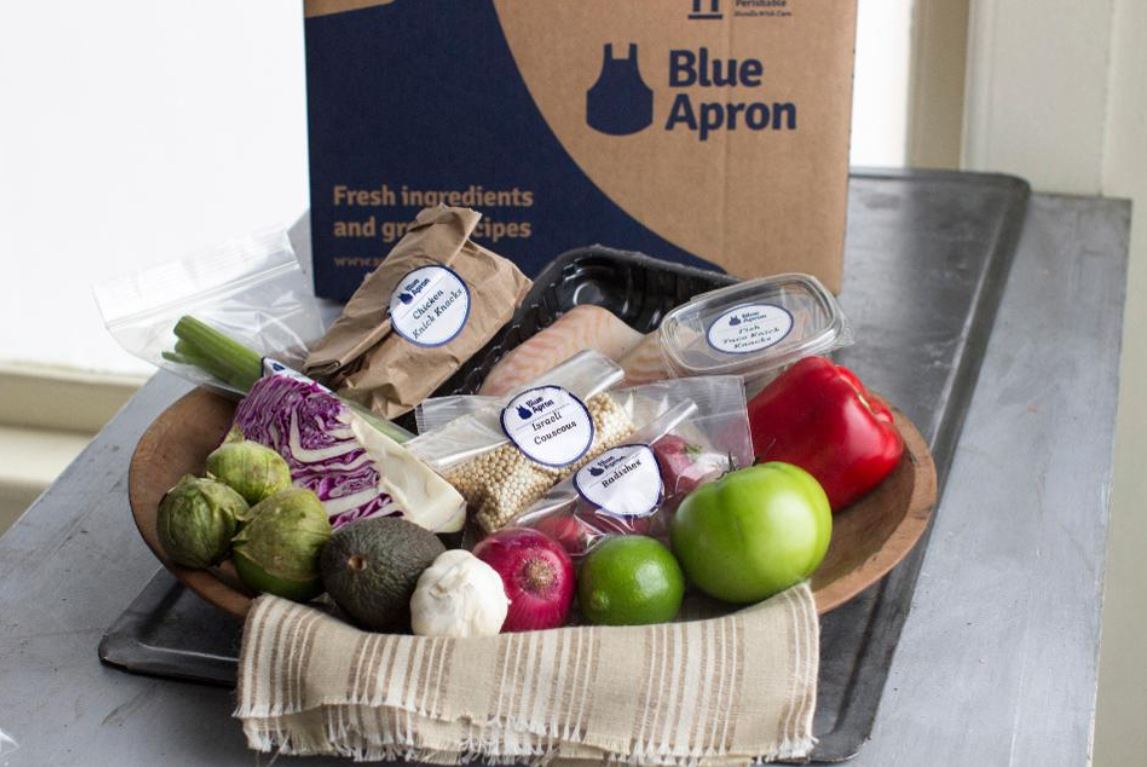
Blue Apron provides consumers weekly subscriptions to complete ready-to-cook meal kits. Their value proposition has been to be a healthier and less expensive option than prepared take-out foods and more convenient than creating meals from scratch.
As Rich Duprey described in The Motely Fool, those needs are now met better by supermarket meal kits which are even less expensive and even more convenient as they can be picked up or delivered on an as-needed basis without a subscription. It’s a “more successful model, though at the same time causing the product to be commoditized.”
Koslowski will be the third CEO in two years and is going to be part of the 40% of new leaders who fail in their first 18 months. The most recent CEO, Brad Dickerson, tried to “Cater only to Blue Apron’s most loyal (and profitable) customers.” He just got fired. Koslowski has a marketing background. She may be able to get more people to try the service. But they won’t stick with it.
Why not?
Because Blue Apron forgot the lesson of the cake egg.
Betty Crocker’s original all-in-one cake mix failed. As Drew Boyd explained in Psychology Today, housewives felt guilty about using Betty Crocker’s original mix. It was too easy and required too little work from them. They didn’t own the cake. When Betty Crocker changed the recipe and make housewives add an egg, they felt invested. (And, in the 1950s, it was, indeed, housewives.)
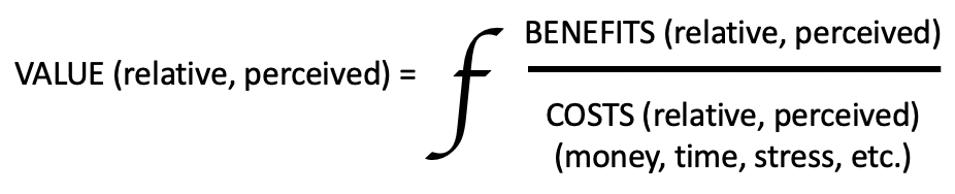
The essential consumer value equation is that:
GEORGE BRADT
Relative perceived VALUE is a function of relative perceived BENEFITS / relative perceived COSTS
The ultimate benefits are emotional feelings derived from positive features. Costs include money, time, stress and the like.
Betty Crocker’s egg switched their field of play from the cost side (convenience, or time and stress) to the benefit side (family appreciation of homemade.)
Blue Apron has been playing on the cost side with more convenience and lower prices.
Their critical point of inflection came when Amazon bought Whole Foods, blurring the line between bricks and clicks.
Blue Apron has been fighting a retreating battle to protect its subscription business. They won’t win.
Two key lessons here:
1) Do a real due diligence
Koslowski should have known she faces insurmountable barriers. As I wrote in my article on Managing Executive Onboarding Risk, people should keep their eyes open with low levels of risk, manage manageable risk, resolve mission-crippling risks and walk away from insurmountable barriers.
Koslowski faces insurmountable barriers joining a company whose reason for existence has disappeared. She may be able to find a new purpose for the brand and its assets – or not.
Don’t do that. Know what you’re getting into. Don’t walk into the valley of death blindly.
2) Start with consumers
Any strategic discussion that begins with “We need” or “We want” has a bias to solve the company’s problems and capture value. Instead start with “They need” or “They want.” Solve a consumer problem first to create value. Then, secondly, figure out how to capture your fair share of the value you create.
“Protecting” most profitable revenue streams never works over the long term. Eventually the new technology whether it’s books, steam engines or the Internet wins. And these days, the long term can show up much faster than you’re ready for.
Start with good for them. Then move to good at it, and finally good for us. That translates to start with an unsolved consumer or customer problem. Figure out a way to solve that problem that no one else can do. Then build best-in-class capabilities to move beyond good at it. If you do that, it will be good for you, your teammates and shareholders in the end.
[/et_pb_text][/et_pb_column][/et_pb_row][/et_pb_section]