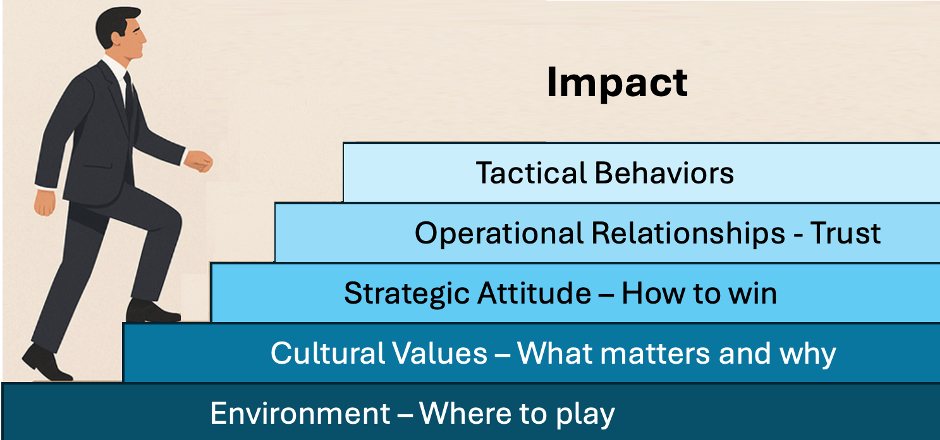
No matter how elegant the words, strategies are useless unless they help others make choices. Like most, BMW’s stated strategies are too generic and fail to discriminate. Instead, make sure your strategies guide the investment of time and resources.
As the case in point, in BMW’s new strategy it announced it would focus on
1. “Digital services make mobile life easier for customers
2. New luxury-class models planned for most profitable segments
3. Combining operational excellence and new ways of thinking.”
Essentially they are going to grow by broadening their “technological expertise” while managing their “current business to perfection” and investing in the appropriate people skills for both.
Who doesn’t do that?
This was just the most recent example of the issue. Almost everybody falls into this trap. It’s almost guaranteed you’ve worked for an organization that spent nearly incredible amounts of time crafting a strategy that ended up looking like it was designed by a committee and didn’t really guide choices throughout the organization. Some of you may have current strategies that fit this criteria.
Michael Porter famously suggested that strategies are about choosing what not to do. My partner, Harry Kangis goes one step further suggesting that “Choosing not to do something that’s a bad idea is easy. The hard choice is choosing not to do something that’s a good idea – for someone else.”
Let’s go once step further and use language that people in the organization will understand, a hierarchy of choices to guide investment by plank.
1. Best In Class (Superior)
2. World Class (Parity)
3. Strong (Above Average)
4. Good Enough (Minimum Viable)
5. Out Of Scope (Do Not Do)
Best In Class (Superior)
This is going to require an investment to be better than anyone else. Count on paying people focused on these areas in the top 10% of people like them. Count on spending an inordinate amount of time and resources in these areas.
Think about Gillette investing in the technology behind its razor blades to stay on the leading edge.
World Class (Parity)
This is also going to require a substantial investment to make sure no one is better than you. Count on paying people focused on these areas in the top 25% of people like them. Count on spending material amounts of time and resources in these areas.
Think about five-star hotels investing in service to stay even with all the other five-star hotels.
Strong (Above Average)
This requires some investment. Expect to pay people here “competitively” – at or above market rates. Expect to spend some time and money here though nowhere near as much as in areas where you’re going to be world class or best in class.
Good Enough (Minimum Viable)
This is where discrimination is a good thing. This is where you simplify or outsource to get by with a minimum viable product or service. You’re going to pay people here whatever you can get away with.
Think about UPS hiring minimum wage people to load delivery trucks to make life easier for their world class drivers.
Out Of Scope (Do Not Do)
Not now. Not later. Not ever.
BMW Strategy Revisited
Imagine if BMW’s real strategy was:
1. Invest in digital services to be best in class at making mobile life easier for customers
2. Invest in new world class luxury-class models planned for most profitable segments
3. Combining strong operational excellence and new ways of thinking.
Then people would know the relative priorities and where to spend their money and time.
Implication For You
Stop being politically correct. You can’t focus on something without choosing not to focus on something else. You can’t over-invest in one area without under-investing in another. Pay your top performers in your most important areas what they deserve. Pay your underperformers in your less important areas what they deserve, accepting that some of them will leave and go to places where they are strategically important. You’re not saying they’re not important. You’re just saying they’re not important to you.