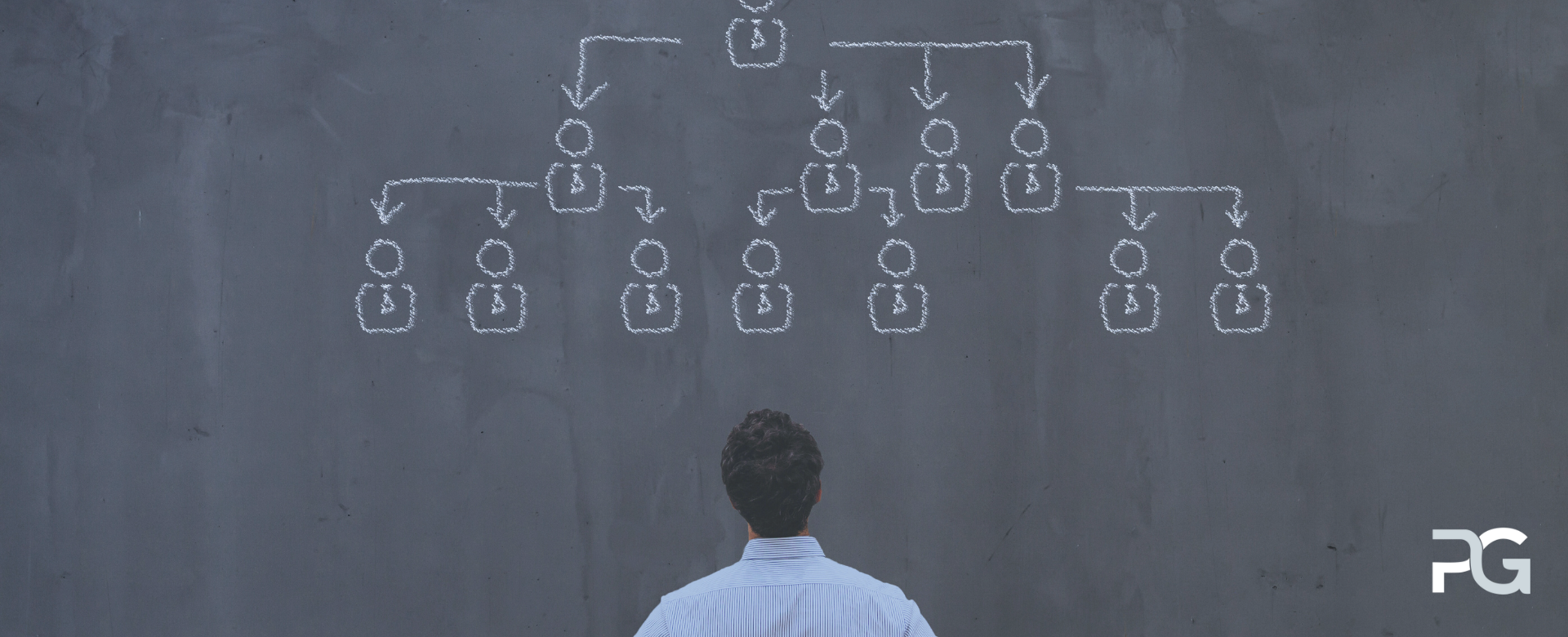
New leaders should have an organizing framework and not follow it. In the wise words of Wharton Professor Len Lodish, “It is better to be vaguely right than precisely wrong.” We can break managers and employees into four types, depending on how they approach an organizing framework:
-
(Photo credit: Wikipedia) Random: those who have no framework and are not concerned about it and act in random ways
- Randomly Dogmatic: those who have no framework and think they do
- Rigid: Those who do have a framework and always follow it
- Purposefully flexible: Those who have a framework and don’t always follow it
Purposefully flexible wins.
Random
You know these people. They bounce from idea to idea and task to task. They may be full of energy and activity, but have a hard time sticking with something long enough to deliver meaningful results. While they’re not dangerous, they could benefit from a little direction – scratch that – a lot of direction.
Randomly Dogmatic
Conversely, people trying to follow a framework that doesn’t actually exist are dangerous. The point is not so much that the framework doesn’t exist at all, but that it does exist in their minds. They might think they understand the framework, might think they are following it, but they are not. They push one thing at one time and then push something exactly opposite later – all with a lot of conviction. Stay out of their way.
Rigid
On the surface, people who follow sound frameworks are relatively easy to deal with. They are predictable. When things go as expected, things work well. The trouble comes when they don’t; then rigid people have a hard time reacting to changing circumstances and adjusting. This is when palace coups, mutinies and revolutions occur.
Purposefully Flexible
There’s a framework for the singing of the national anthem at the beginning of baseball games in the United States. The featured artist sings and the crowd listens or hums quietly.
On Disability Awareness Day at Fenway Park, the featured singer was a young man with autism. A little into the anthem, he started stumbling over the words. The crowd, as one, flexed off the accepted framework and took over the lead, making for an amazing supportive and inspiring moment.
http://www.youtube.com/watch?v=NhcZRFcjbhw
Preparation breeds confidence. Have an organizing framework and a plan. But don’t follow your strategy off a cliff. As things change, figure out if the changes are major or minor, and if they have a temporary or enduring impact.
- If the change is minor and the impact is temporary, play it down and keep doing what you’re doing.
- If the change is minor and the impact is enduring, evolve things over time to take into account the new circumstances.
- If the change is major and the impact is temporary, manage the issue as a crisis or opportunity and get through it.
- If the change is major and the impact is enduring, hit a restart button and rethink your framework and plans.
Remember, Darwin’s survival of the fittest is not about the strongest, fastest, or smartest, it’s about those best able to adapt to changing circumstances. Those are the ones that are purposefully flexible.
This is a big part of step 10 of The New Leader’s Playbook: Evolve People, Plans, and Practices to Capitalize on Changing Circumstances
- By the end of your first 100-Days, you should have made significant steps toward aligning your people, plans, and practices around a shared purpose. Remember, this is not a one-time event but, instead, something that will require constant, ongoing management and Darwinian improvement.
Click here to read about each step in the playbook
Click here for YouTube videos highlighting each step
————————————————————-
The New Leader’s Playbook includes the 10 steps that executive onboarding group PrimeGenesis uses to help new leaders and their teams get done in 100-days what would normally take six to twelve months. George Bradt is PrimeGenesis’ managing director, and co-author of The New Leader’s 100-Day Action Plan (Wiley, 3rd edition 2011) and the freemium iPad app New Leader Smart Tools. Follow him at @georgebradt or on YouTube.