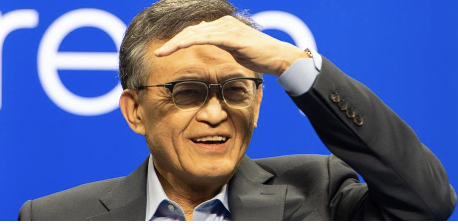
A familiar scene unfolds in Silicon Valley—an iconic company fights for its life. This isn’t the ’80s. It’s today, with Intel staring down the steepest cliff in its storied history. The script feels strangely reminiscent of the drama that once captivated a different boardroom, when Andy Grove orchestrated Intel’s bold pivot from memory chips to microprocessors. Yet this time, the stakes are vastly different, the chessboard more crowded, and the moves—uncomfortably—more complex.
If Andy Grove’s era was about betting the company on one big, bold move, Lip-Bu Tan’s challenge is akin to juggling several fiery torches, each threatening to set the whole house ablaze. To put this in broader context, consider Sergio Zyman’s two pivotal (and oh-so-contrasting) bets at Coca-Cola in the 1980s: Diet Coke, a runaway hit, and New Coke, a legendary flop. What can Grove’s single-minded pivot and Zyman’s divergent outcomes teach Intel about the nature—and danger—of transformational bets?
Grove’s Crisis: Singular Focus, Relentless Execution
Grove, the austere champion of “only the paranoid survive,” faced an existential threat from Japanese memory chip giants. His solution? Burn the boats and head inland. Grove cut the cord on memory chips—Intel’s very identity—and poured everything into microprocessors. He mourned tradition, embraced creative confrontation, and streamlined the company with the discipline of a field general: layoffs, flattening, and accountability enshrined through OKRs (Objectives and Key Results).
The result? Intel didn’t just survive—it became the engine of the PC revolution, with Grove’s decision still taught in business schools as the gold standard for decisive, focused transformation.
Tan’s Challenge: Parallel Wars, Relentless Complexity
Fast-forward to today. Lip-Bu Tan inherits a company that’s not just under siege in one arena—Intel is battered on all fronts: lagging-edge manufacturing, AI irrelevance, bureaucratic sclerosis, and an evaporated aura of technological leadership. The rivals are familiar—TSMC, Nvidia, AMD—but the scale is daunting: Intel is now a 100,000-person conglomerate whose own inertia threatens to swamp any single reform.
Tan’s plan isn’t one singular bet. It’s a multi-front campaign: slimming management, reviving engineering spirit, chasing AI and custom silicon, rebuilding foundry credibility, and courting a galaxy of new customers. Each move is necessary but, by definition, dilutes focus. As Tan himself has warned, “There are no quick fixes.”
Zyman’s Coca-Cola: Big Bets with Big Divergence
Let’s zoom out. Sergio Zyman’s work at Coca-Cola in the 1980s offers a sharp lesson in the perils of strategic bets. His launch of Diet Coke exemplified agile market read—a bold, customer-centric gamble that paid off, reshaping soda for a calorie-conscious era. But the New Coke fiasco, born from fear of Pepsi’s challenge and flawed market research, serves as a touchstone for corporate overthinking: an audacious pivot that backfired spectacularly by alienating the loyal core.
What separated Diet Coke from New Coke? Really understanding the customer, focus versus distraction, and humility about the limits of transformation.
The Turnaround Equation: Focus, Clarity, and Courage
Grove had the luxury—and the courage—to simplify. His turnaround was a single, make-or-break play. He could point to one front, one enemy, one mission. Intel today can only wish for such clarity. Tan must navigate a labyrinth of technology, markets, and geopolitics – including the US government potentially taking a stake in the company, while reawakening a stagnant culture on a scale Grove never faced.
Herein lies the risk—and the Zyman parallel. Grove’s triumph was Diet Coke: precise, purpose-driven, and grounded in authentic customer demand. But Tan’s multi-domain blitz risks becoming New Coke: a well-intentioned, impressive array of moves that, if not tightly anchored in what customers (and the market) truly want, could flounder.
Strategy for Survival: Paranoia Meets Humility
The core lesson isn’t about magnitude, but about clarity of purpose and the humility to adapt. Grove’s paranoia served him well because he refused to let habit or pride block decisive action—and he never lost sight of what mattered. Zyman’s cautionary tale warns that even titans fall by chasing the wrong signals with the right amount of boldness.
For Tan, this means picking the right fights—not all the fights. Prioritizing real, visible wins. Cutting through complexity without losing the customer’s voice. Delivering the 18A process node, yes, but also making sure its value is resonant and necessary for a waiting world. Avoiding the temptation to dazzle at the expense of relevance.
Conclusion: The Next Chapter
Will this be Grove 2.0 or New Coke 2.0? History suggests there is rarely perfect symmetry. The Grove playbook—focused boldness, fed by healthy paranoia—remains relevant. But Tan’s orchestration must be even more nuanced: picking the right priorities, acknowledging what Intel isn’t, and resisting the urge to “fix” everything at once.
Because, as Zyman found out, a bet—no matter how bold or how many—gets judged by only one criterion in the end: Did it refresh the brand’s right to lead, or did it leave people wishing for the classic?
Intel’s answer is being written now, transistor by transistor.